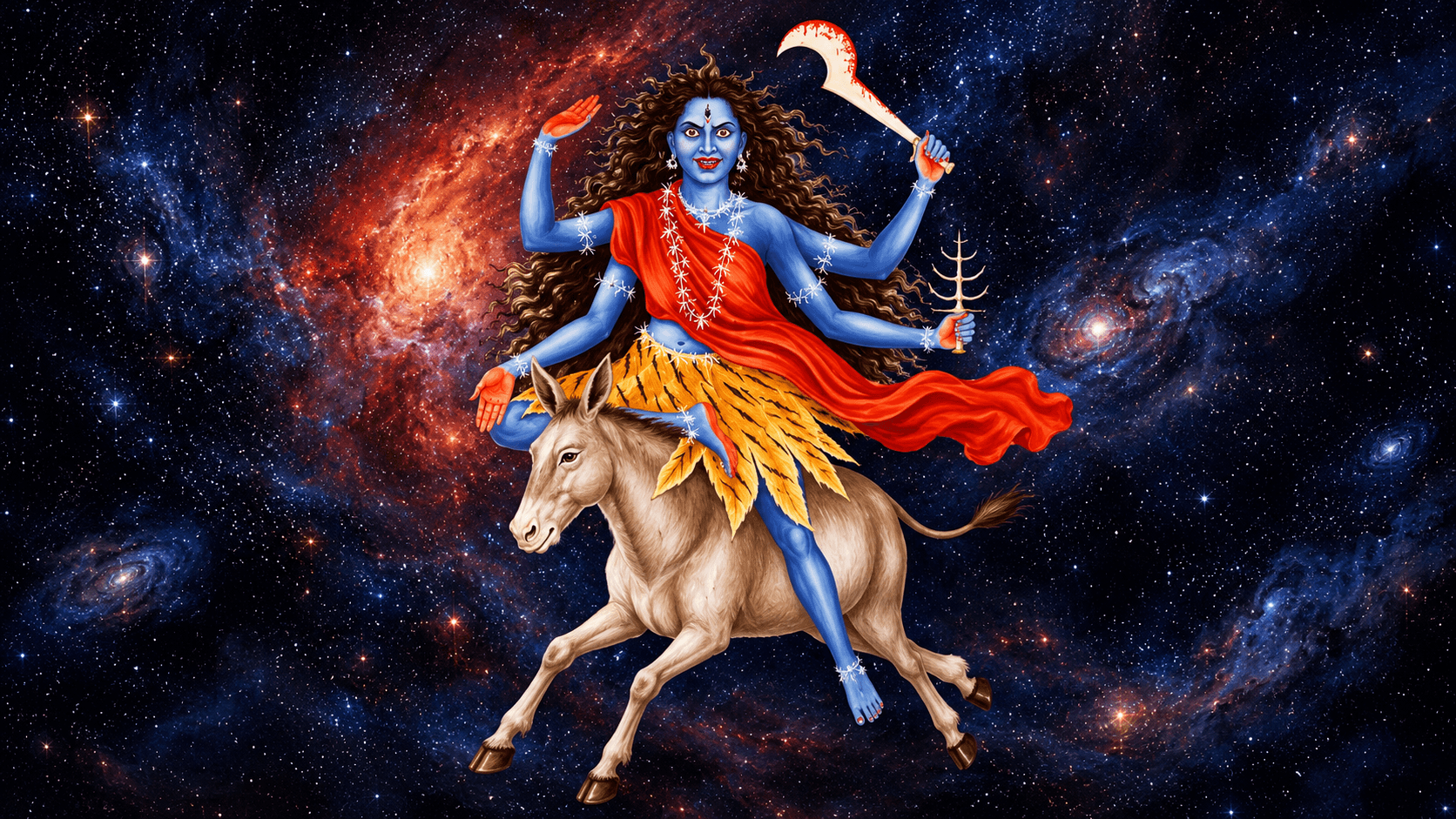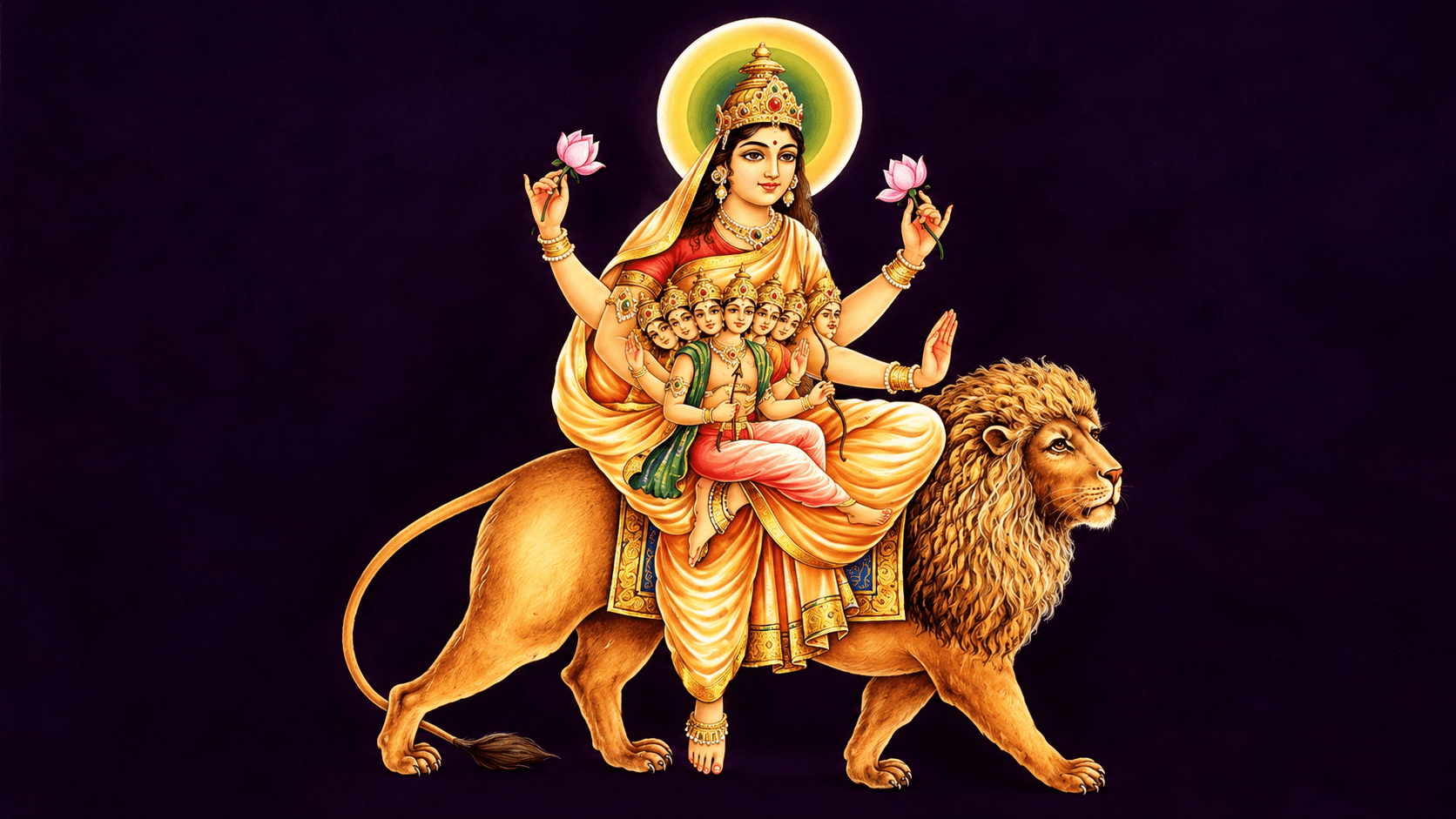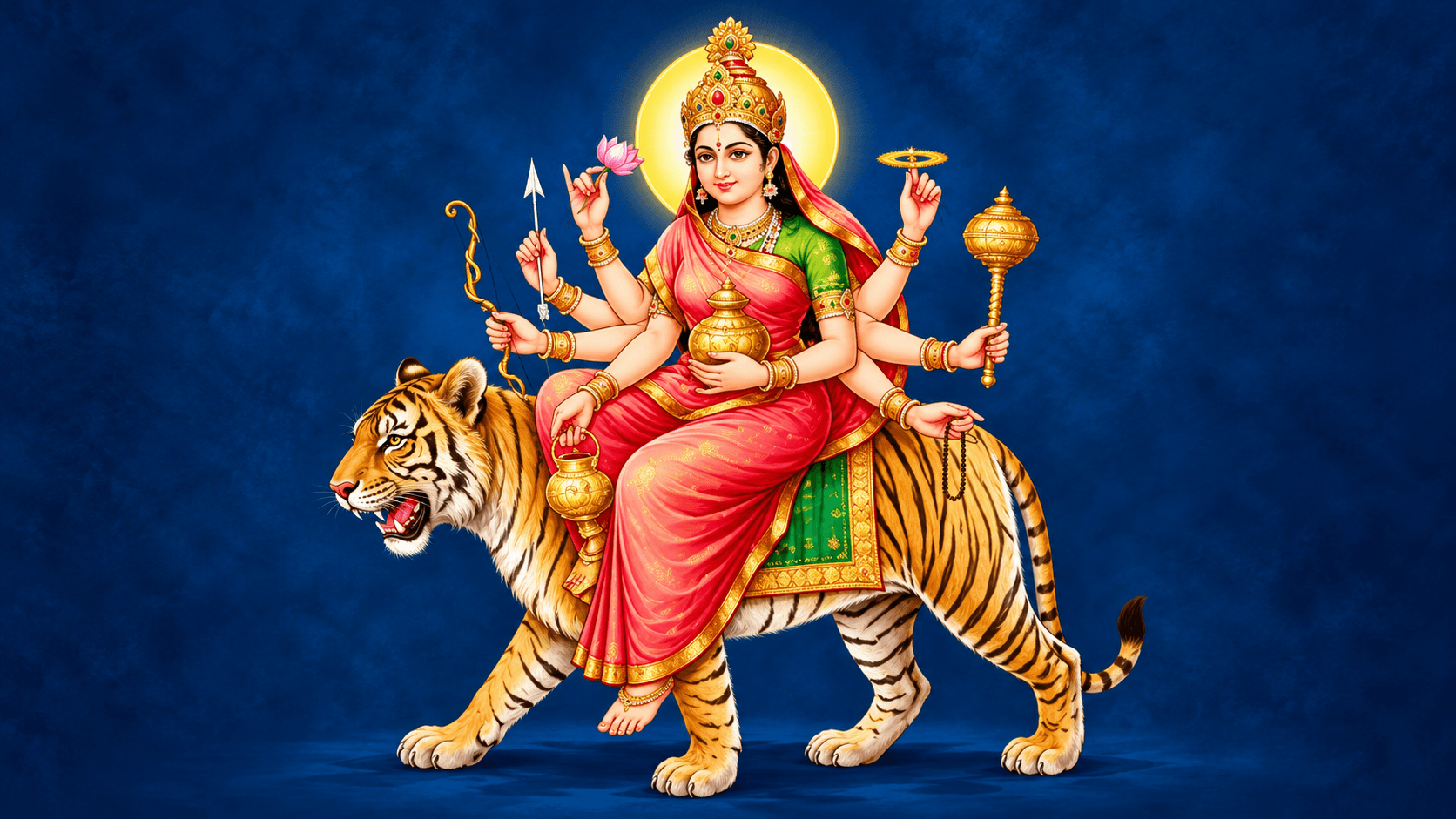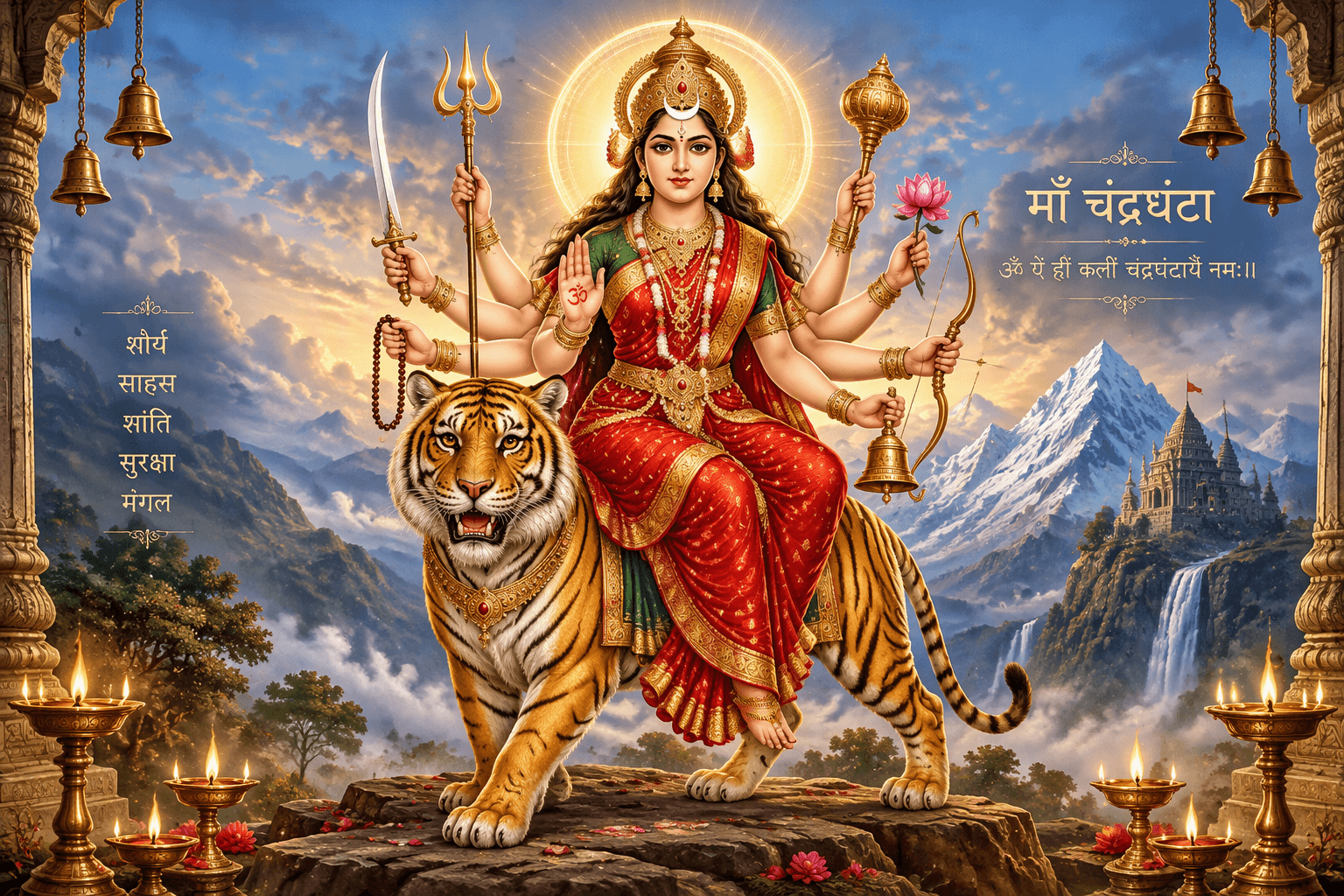
The sixth day of Sharad Navratri, Friday, 16th October 2026, is dedicated to Maa Katyayani, the warrior form of the Goddess who defeated Mahishasura. For devotees of Lord Krishna, she holds a special place because the young gopis of Vrindavan worshipped her with a month-long vow, praying to have Krishna as their husband.
Who is Maa Katyayani?
She takes her name from the sage Katyayana. According to tradition, the sage performed a long penance, hoping that the Goddess would be born as his daughter. Pleased by his devotion, the Goddess granted his wish and blessed him with her divine presence.
When the gods needed a powerful force to defeat the demon Mahishasura, the Goddess appeared in his hermitage. She later took on the fierce demon in battle, representing the victory of good over evil. As she appeared in the home of sage Katyayana, she came to be known as Katyayani, meaning "daughter of Katyayana."
The Story of Maa Katyayani
The buffalo demon Mahishasura had conquered the three worlds and driven the gods from heaven, spreading fear and suffering among the people. The combined energy of Brahma, Vishnu, Shiva and the other gods took shape as a radiant Goddess, who was first worshipped by the sage Katyayana. Riding a lion and armed with divine weapons given by the gods, she fought a fierce battle against Mahishasura.
Despite his strength and ability to change forms, the demon could not withstand the Goddess's divine power. She eventually defeated and killed him, liberating the three worlds from his cruelty and restoring peace and righteousness. This victory is one reason she is honoured as Mahishasuramardini, the Goddess who defeated Mahishasura. Devotees worship her as a symbol of courage, strength and the ultimate triumph of good over evil.
Symbolism and Iconography
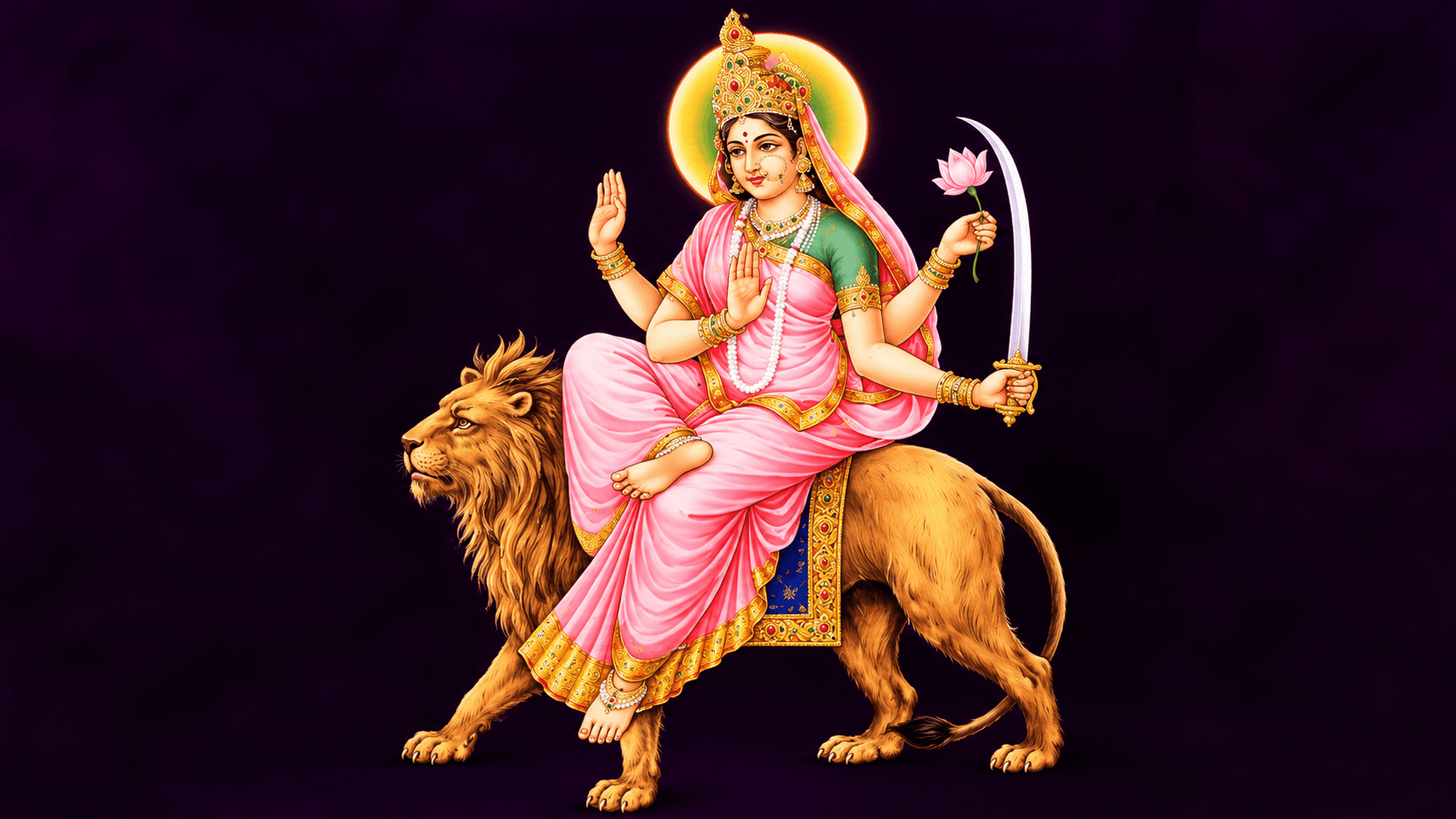
Maa Katyayani is depicted in the following manner:
-
Vehicle: A lion.
-
Arms: Four arms. She holds a sword and a lotus, and her other two hands are raised in blessing (abhaya and varada mudras).
-
Complexion: Bright and golden.
The Gopis' Katyayani Vrata
The Srimad Bhagavatam (Canto 10, Chapter 22) describes how the unmarried gopis of Vraja observed a vow in the month of Margashirsha. Each morning they bathed in the Yamuna, made a deity of the Goddess from sand on the riverbank and worshipped her with sandalwood, flowers, incense and food offerings. While worshipping, they chanted this prayer (SB 10.22.4):
कात्यायनि महामाये महायोगिन्यधीश्वरि।
नन्दगोपसुतं देवि पतिं मे कुरु ते नमः॥
Katyayani maha-maye maha-yoginy adhishvari, nanda-gopa-sutam devi patim me kuru te namah.
Meaning: O Goddess Katyayani, great energy of the Lord and controller of all, please make the son of Nanda Maharaja my husband. I offer my obeisances to you.
The gopis did not ask the Goddess for wealth or power. They asked her to help them reach Krishna, and Krishna, pleased with their devotion, promised to fulfil their desire. Many devotees see this as the ideal way to honour the Goddess: as the Lord's energy who can help us come closer to Him.
Maa Katyayani Puja Vidhi at Home
Here is a simple way Maa Katyayani puja can be performed at home:
-
Bathe early and wear clean clothes.
-
Clean the altar, sprinkle Gangajal and worship the kalash.
-
Place a picture of Maa Katyayani and offer red flowers, kumkum, sandalwood and akshat.
-
Light a ghee lamp and incense.
-
Chant her dhyana mantra and the gopis' prayer given above.
-
Offer the bhoga and perform aarti.
Maa Katyayani Mantra
Dhyana mantra
चन्द्रहासोज्ज्वलकरा शार्दूलवरवाहना।
कात्यायनी शुभं दद्याद्देवी दानवघातिनी॥
Chandrahasojjvala-kara shardula-vara-vahana, katyayani shubham dadyad devi danava-ghatini.
Meaning: May Goddess Katyayani, who holds a shining sword, rides a great lion and destroys demons, bestow auspiciousness.
Stuti
या देवी सर्वभूतेषु माँ कात्यायनी रूपेण संस्थिता।
नमस्तस्यै नमस्तस्यै नमस्तस्यै नमो नमः॥
Simple mantra: ॐ देवी कात्यायन्यै नमः (Om Devi Katyayanyai Namah)
Bhoga and Colour for Day 6
The bhoga and colour of Day 6 is:
Bhoga: Honey is the traditional offering to Maa Katyayani. Keep all bhoga sattvic.
Colour: In the weekday-based tradition followed in Maharashtra, Day 6 in 2026 falls on a Friday, and the colour is green. Other regions use different lists.
A Devotional Reflection: What to Pray For
Unmarried young women traditionally worship Maa Katyayani for a good marriage, following the example of the gopis of Vrindavan. According to the Srimad Bhagavatam, the gopis observed the Katyayani Vrata during the month of Margashirsha, worshipping the Goddess and praying to have Lord Krishna as their husband. Their devotion reflects the importance of sincerity, faith and complete dedication to the Lord.
Maa Katyayani is the warrior Goddess who defeated Mahishasura and restored peace by protecting the worlds from his tyranny. For devotees of Krishna, she is also understood as the Lord's divine energy, who helps sincere souls progress towards Him. Her worship on Day 6 of Navratri represents courage, determination and the strength to overcome obstacles. As you offer honey, chant her mantra and complete your puja, reflect on the intentions behind your prayers. Seek not only worldly blessings but also spiritual growth and a deeper connection with the Lord.
May Maa Katyayani bless you and your family with strength, purity and devotion. To grow in that closeness, join the community at ISKCON Bhiwandi, where you can take part in kirtans, festivals and seva throughout the year.
FAQs
When is Navratri Day 6 in 2026?
Navratri Day 6, dedicated to Maa Katyayani, falls on Friday, 16th October 2026.
Why did the gopis worship Katyayani?
According to the Srimad Bhagavatam (10.22), the gopis observed a month-long vow to Katyayani, praying that Krishna, the son of Nanda Maharaja, would become their husband.
What is the Katyayani mantra for marriage?
The gopis' prayer "Katyayani maha-maye..." mentioned above in this blog from SB 10.22.4 is the best-known mantra associated with this vow.
What bhoga is offered to Maa Katyayani?
Honey is the traditional bhoga on Day 6.