GAUDIYA VAISHNAVISM
Gaudiya Vaishnavism
Six Goswamis of Vrindavan
Gaudiya Vaishnavism is a sect of Hinduism based on the Vedas and especially drawing its theological basis from the Bhagavad-Gita and the Srimad-Bhagavatam. The movement was inspired by Lord Chaitanya Mahaprabhu and the defining element of this sampradaya is that Krishna is the Supreme Lord and in turn the focus on Bhakti (devotion) to Krishna. Bhakti that is greater than Mukti (liberation), Bhakti that is sweet, almost mellifluous and all-encompassing.
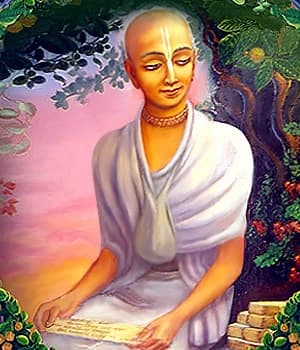
Srila Rupa Goswami
Śrīla Rūpa Gosvāmī is one of the foremost ācāryas of the Gauḍīya Vaiṣṇava tradition and one of the principal disciples of Śrī Caitanya Mahāprabhu. Among the Six Gosvāmīs of Vṛndāvana, he occupies an especially significant position because Śrī Caitanya Mahāprabhu personally instructed and empowered him to explain the science of pure devotional service and the transcendental mellows of loving relationships with Śrī Kṛṣṇa. The followers of Śrī Caitanya Mahāprabhu are therefore often known as rūpānugas, those who follow in the footsteps and teachings of Śrīla Rūpa Gosvāmī.
Rūpa Gosvāmī appeared in a highly learned family and was the brother of Śrīla Sanātana Gosvāmī and Anupama, who was also known as Vallabha. Anupama's son was Śrīla Jīva Gosvāmī, who later became one of the greatest philosophers and theologians of the Gauḍīya Vaiṣṇava tradition. Rūpa and Sanātana were extraordinarily learned and were well acquainted with Sanskrit scriptures as well as the languages, culture, and administration of their time. Because of their abilities, they became important officials in the government of Nawab Hussain Shah of Bengal. Rūpa Gosvāmī was known in government service as Dabira Khāsa, while Sanātana Gosvāmī was known as Sākara Mallika. Although they possessed great wealth, influence, education, and social position, internally they had little attraction for such material achievements and strongly desired a life completely dedicated to the service of Kṛṣṇa.
A major turning point in their lives came when Śrī Caitanya Mahāprabhu visited Rāmakeli. Rūpa and Sanātana secretly approached Mahāprabhu in a mood of extraordinary humility. Because they had been serving a Muslim government, they considered themselves fallen and unqualified, although in reality they were exalted devotees. Mahāprabhu accepted them with great affection and assured them of His mercy. From this point onward, their determination to abandon worldly prestige and dedicate their lives completely to the mission of Śrī Caitanya Mahāprabhu became firmly established.
Rūpa Gosvāmī eventually arranged to leave government service. His renunciation was thoughtful and responsible rather than impulsive. According to Śrī Caitanya-caritāmṛta, he divided his accumulated wealth, giving fifty percent to brāhmaṇas and Vaiṣṇavas, twenty-five percent to his relatives, and keeping the remaining portion for emergencies and necessary expenses. He also made arrangements to help Sanātana, who had not yet been able to escape his government position. Having properly arranged his worldly affairs, Rūpa Gosvāmī left behind his wealth and prestigious career and began a life devoted entirely to Kṛṣṇa.
One of the most important events in Rūpa Gosvāmī's life occurred when he met Śrī Caitanya Mahāprabhu at Prayāga. At Daśāśvamedha-ghāṭa, Mahāprabhu personally instructed him for ten days. These instructions form one of the theological foundations of the Gauḍīya Vaiṣṇava tradition. Mahāprabhu explained the nature of the living entity, the rarity of pure devotional service, the mercy of Kṛṣṇa and the spiritual master, the cultivation of the creeper of devotion, the different stages of bhakti, and ultimately the transcendental mellows of loving service to Kṛṣṇa. Mahāprabhu explained that the living entity wanders throughout the material universes and that, by great fortune, one receives the seed of devotional service through the combined mercy of guru and Kṛṣṇa: “guru-kṛṣṇa-prasāde pāya bhakti-latā-bīja.” This seed must then be watered by hearing and chanting until the creeper of devotion grows beyond the material universe and reaches the lotus feet of Kṛṣṇa.
Mahāprabhu did not merely give Rūpa Gosvāmī information; He spiritually empowered him to understand and explain extremely deep truths concerning bhakti and rasa. This special empowerment became evident when Rūpa later met Mahāprabhu at Jagannātha Purī. During the Ratha-yātrā festival, Mahāprabhu exhibited the internal mood of Śrīmatī Rādhārāṇī meeting Kṛṣṇa at Kurukṣetra while longing to bring Him back to the intimate surroundings of Vṛndāvana. Rūpa Gosvāmī understood this confidential mood and composed the famous verse beginning “priyaḥ so 'yaṁ kṛṣṇaḥ saha-cari kuru-kṣetra-militas.” When Mahāprabhu discovered the verse, He was astonished that Rūpa had understood His innermost feelings. Svarūpa Dāmodara explained that Rūpa could understand them only because he had received Mahāprabhu's special mercy.
While at Jagannātha Purī, Rūpa Gosvāmī associated closely with great devotees such as Śrīla Haridāsa Ṭhākura and received further guidance from Mahāprabhu. He also began composing dramatic works describing Kṛṣṇa's pastimes. Mahāprabhu carefully examined his writings and was greatly pleased with his realization and presentation. Eventually, Mahāprabhu instructed Rūpa to go to Vṛndāvana and carry out an enormous mission. Together with Sanātana and the other Gosvāmīs, he was to rediscover the forgotten places of Kṛṣṇa's pastimes, establish proper Vaiṣṇava conduct, reveal the spiritual importance of Vṛndāvana, establish deity worship, and compose authoritative literature explaining the philosophy and practice of pure devotional service.
In Vṛndāvana, Rūpa Gosvāmī lived a life of remarkable simplicity and renunciation. The Six Gosvāmīs possessed practically nothing and had no desire to accumulate material comforts. They spent their days and nights chanting Kṛṣṇa's names, discussing His pastimes, studying and writing scriptures, discovering holy places, worshiping the Lord, and guiding devotees. Their renunciation was not an artificial rejection of the world but a natural consequence of their intense absorption in Rādhā and Kṛṣṇa. Śrīnivāsa Ācārya therefore glorifies them as “nidrāhāra-vihārakādi-vijitau,” indicating that they had conquered the ordinary demands of sleeping, eating, and recreation because they were constantly absorbed in devotional service.
Rūpa Gosvāmī became intimately associated with the deity of Śrī Govindadeva in Vṛndāvana. According to the Gauḍīya tradition, he discovered the deity of Govindadeva at Gomatila. Govindadeva subsequently became one of the principal deities of the Gauḍīya Vaiṣṇavas in Vṛndāvana. The three famous deities Madana-mohana, Govindadeva, and Gopīnātha are traditionally understood as representing sambandha, abhidheya, and prayojana respectively. Madana-mohana helps establish one's relationship with Kṛṣṇa, Govindadeva represents engagement in devotional service within that relationship, and Gopīnātha represents the ultimate perfection of love of God. Rūpa Gosvāmī's connection with Govindadeva is therefore especially appropriate because Rūpa systematically explained abhidheya, the actual practice and cultivation of devotional service.
Rūpa Gosvāmī's greatest contribution to the Gauḍīya tradition is found in his writings. His Bhakti-rasāmṛta-sindhu systematically explains the science of devotional service and devotional rasa. Śrīla A. C. Bhaktivedanta Swami Prabhupāda later presented its essential teachings to the modern world through The Nectar of Devotion. In Bhakti-rasāmṛta-sindhu, Rūpa Gosvāmī gives the celebrated definition of pure devotional service: “anyābhilāṣitā-śūnyaṁ jñāna-karmādy-anāvṛtam, ānukūlyena kṛṣṇānuśīlanaṁ bhaktir uttamā.” Pure devotional service means favorable cultivation of service to Kṛṣṇa without separate material desires and without being covered by fruitive activity or speculative knowledge. This definition has become one of the fundamental principles of Gauḍīya Vaiṣṇava theology.
He also described the gradual development of spiritual life from initial faith to pure love of Kṛṣṇa. A person begins with śraddhā, or faith, which leads to sādhu-saṅga, association with devotees. Through such association one takes up bhajana-kriyā, regulated devotional practices, which gradually produces anartha-nivṛtti, the removal of unwanted tendencies. The devotee then develops niṣṭhā, steadiness; ruci, spiritual taste; āsakti, deep attachment to Kṛṣṇa; bhāva, the initial awakening of pure spiritual emotion; and finally prema, pure love of God. This progression has remained one of the most important descriptions of the development of a devotee's spiritual life.
Another important work of Rūpa Gosvāmī is Ujjvala-nīlamaṇi, in which he gives a detailed theological explanation of mādhurya-rasa, the conjugal loving relationship with Kṛṣṇa. He also wrote Upadeśāmṛta, which Śrīla Prabhupāda translated and explained as The Nectar of Instruction. In this comparatively short but profound work, Rūpa Gosvāmī teaches how a devotee should control the senses, avoid activities unfavorable to bhakti, accept practices favorable to devotion, properly associate with Vaiṣṇavas, chant Kṛṣṇa's holy name, and understand the exalted position of Vṛndāvana, Rādhā-kuṇḍa, and Śrīmatī Rādhārāṇī. His literary works also include Vidagdha-mādhava, Lalita-mādhava, Dāna-keli-kaumudī, Haṁsadūta, Uddhava-sandeśa, Stava-mālā, and numerous prayers and devotional compositions.
Rūpa Gosvāmī also played a central role in training the next generation of Gauḍīya Vaiṣṇava teachers. His nephew Śrīla Jīva Gosvāmī eventually came to Vṛndāvana and took shelter of Rūpa and Sanātana. Under their guidance, Jīva Gosvāmī became one of the greatest philosophers in the history of the Gauḍīya tradition. Through works such as the Ṣaṭ-sandarbhas, Jīva systematically established the philosophical conclusions that had been given by Mahāprabhu and taught by Rūpa and Sanātana. In this way, the teachings received directly from Śrī Caitanya Mahāprabhu were carefully preserved, expanded, defended, and transmitted to future generations.
Rūpa Gosvāmī also shared a very affectionate relationship with Śrīla Raghunātha dāsa Gosvāmī. After the disappearance of Śrī Caitanya Mahāprabhu and Svarūpa Dāmodara, Raghunātha eventually came to Vṛndāvana, where Rūpa and Sanātana treated him with great affection. Raghunātha possessed particularly intimate knowledge of Mahāprabhu's internal moods, having served under Svarūpa Dāmodara in Purī. Thus Rūpa Gosvāmī's systematic presentation of devotional rasa and Raghunātha dāsa Gosvāmī's profound absorption in the intimate service of Rādhā and Kṛṣṇa became deeply influential upon later Gauḍīya Vaiṣṇava teachers.
Within Gauḍīya theology, Rūpa Gosvāmī is understood not merely as a historical scholar or religious teacher. In Kṛṣṇa's eternal Vraja pastimes he is identified as Śrī Rūpa-mañjarī, an intimate maidservant of Śrīmatī Rādhārāṇī. This spiritual identity is important for understanding why Gauḍīya Vaiṣṇavas give such an exceptional position to his teachings concerning the service of Rādhā and Kṛṣṇa. Śrīla Narottama dāsa Ṭhākura expresses this aspiration in the famous words “śrī-rūpa-mañjarī-pada, sei mora sampada”—the lotus feet of Śrī Rūpa-mañjarī are my treasure. He similarly prays, “rūpa-raghunātha-pade haibe ākuti, kabe hāma bujhaba se yugala-pīriti,” expressing that genuine eagerness to follow Rūpa and Raghunātha opens the way to understanding the transcendental love of the Divine Couple, Śrī Śrī Rādhā-Kṛṣṇa.
Rūpa Gosvāmī spent the later portion of his life in Vṛndāvana, absorbed in writing, teaching, worship, remembrance, and service to Rādhā and Kṛṣṇa. His disappearance is traditionally placed around 1564 CE, and his samādhi is located at the Śrī Śrī Rādhā-Dāmodara Temple in Vṛndāvana. That location later became particularly significant for the modern Gauḍīya Vaiṣṇava movement because Śrīla Prabhupāda lived at Rādhā-Dāmodara before traveling to the West and performed much of his translation and writing there in the association of the Gosvāmīs' sacred places.
The importance of Śrīla Rūpa Gosvāmī in the Gauḍīya paramparā can ultimately be understood through the special responsibility entrusted to him by Śrī Caitanya Mahāprabhu. Mahāprabhu revealed the highest gift of love of Kṛṣṇa and empowered Rūpa Gosvāmī to systematically explain that gift for future generations. Rūpa defined pure bhakti, described its progressive stages, explained the science of rasa, established the ideals of Vaiṣṇava behavior and revealed the exalted devotional moods of Vṛndāvana. For this reason, following Śrī Caitanya Mahāprabhu ultimately means following the devotional conclusions transmitted through Śrīla Rūpa Gosvāmī. This is the basis of the Gauḍīya aspiration to become rūpānuga—to follow in the footsteps of Śrī Rūpa Gosvāmī and serve Śrī Śrī Rādhā-Kṛṣṇa according to the teachings given by Śrī Caitanya Mahāprabhu.
Gaudiya Vaishnavism
Gaudiya Vaishnava Acharyas
The Acharyas appear in this material world on the instructions of the Supreme Lord in order to attract the conditioned soul. Achara means – behavior, practices, lifestyle and Acharya means one who teaches through his behavior, practice, lifestyle. An Acharya practices what he preaches and preaches what he practices. There is no difference between either. Acharya means one who knows the scriptural injunctions and follows them practically in life, and teaches them to his disciples, although he acts as a servant of the Lord. Nonetheless, he must always be considered as an authorized representative of the Lord.
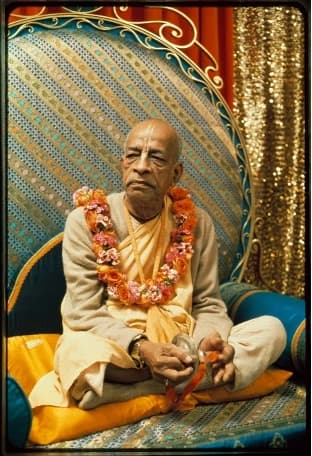
A.C. Bhaktivedanta Swami Prabhupada
His Divine Grace A.C. Bhaktivedanta Swami Prabhupada appeared in a family of pure Gaudiya Vaisnavas in 1896 in Calcutta. From early childhood he showed signs of pure devotion to Lord Sri Krishna. At the tender age of five, he single-handedly organized a neighborhood Ratha-yatra festival to glorify Lord Jagannatha. He authentically decorated a small cart to resemble the Lord's colossal chariot in Puri. Besides leading the kirtana party, he organized cooking and prasadam distribution. With his enthusiasm and ecstatic love for Lord Krishna he inspired the community in chanting:
Hare Krishna Hare Krishna Krishna Krishna Hare Hare,
Hare Rama Hare Rama Rama Rama Hare Hare.
Unlike other children his age who would waste their time playing, Srila Prabhupada preferred to visit the local Radha Krishna temple. For hours together, he would lovingly gaze upon the transcendental forms of Radha-Govindji, absorbing Their divine blessings and beautiful darsana. In his youth, Maharaja Parikshit regularly dressed a Deity of Krishna. Similarly, from his childhood, Srila Prabhupada also began worshiping small Deities of Radha and Krishna. He quickly mastered the traditional beats and ragas on mrdanga and harmonium. With pure devotion, Srila Prabhupada would sing sweet devotional bhajans to please Radha-Govindji.
At twenty-six, he met his eternal spiritual master Srila Bhaktisiddhanta Sarasvati Thakura (Founder Acharya of Gaudiya Math). At their first meeting, Srila Bhaktisiddhanta Sarasvati Thakura gave Srila Prabhupada a divine command: "Go to the West and spread Krishna Consciousness in the English language." In full faith, Srila Prabhupada embraced the order as his life and soul.
Srila Prabhupada, like all pure Vaisnavas, showed immense compassion for the suffering conditioned souls. Although they are rotting in the materialistic life of ignorance, the stubborn conditioned souls insist that they "have no time for spiritual life." Neither their indifference, nor the sizzling summer heat of Delhi could keep Srila Prabhupada from distributing the cooling balm of Krishna consciousness. Once while selling Back to Godhead, he collapsed on the street from heat stroke. Yet he remained fixed in his determination to please his spiritual master.
He took sannyasa in 1959 after retiring from household life. Taking shelter of Vrindavana, he rented a bhajana kutir in the Radha-Damodara temple where he absorbed the association of Sri Rupa and Sri Jiva Gosvamis. Srila Prabhupada spent the next six years performing intensive Krishna bhajana. Regularly, he bathed in Yamuna, and took darshan of Madana Mohana, Govindji, Gopinatha, and Radha Ramana. He prayed for the mercy of the six Gosvamis and continued writing and printing. During bhajana he would receive blessings, inspiration, and direct guidance from the all-merciful Sri Rupa Gosvami.
At this time, he began his life's main literary work, an English translation with commentary of the Srimad Bhagavatam. For Srila Prabhupada, it was out of a devotional outpouring than a mere translation from esoteric Sanskrit to understandable English. Gaudiya Vaisnava history reveals that some advanced Devotees would begin crying in spiritual happiness while reading the Srimad Bhagavatam. Smearing the ink on the pages, their tears would make the lines illegible. Similarly, Srila Prabhupada once said that his Srimad Bhagavatam commentaries are actually expressions of his "devotional ecstacies." Working alone, Srila Prabhupada wrote, begged money to print, and personally hauled the paper to publish the first three volumes of Srimad Bhagavatam. Recollecting these times, he once said humbly to his disciples:
"I did not know anything about writing. But my spiritual master told me to spread Lord Krishna's glories in English. So this is what I tried to do, following in the steps of my Guru Maharaja. He was such a transcendental aristocrat. I had no great personal qualifications. I just tried to follow his instructions."
Other disciples of Srila Bhaktisiddhanta Sarasvati Thakura tried unsuccessfully to preach Krishna consciousness in English-speaking Europe. Srila Prabhupada, however, had full faith in his guru and Krishna's name. Fearless as Abhimanyu, he brought Krishna Consciousness to the world's most powerful country, America. Besides speaking English and being a "super power," America was leading the world in the sinful activities of meat eating, illicit sex, gambling, intoxication. If Americans would take up Krishna consciousness, thought Srila Prabhupada, then surely it would spread to "every town and village," as Lord Chaitanya predicted five-hundred years ago. After all, "What's a glorious victory without a glorious fight," which Srila Prabhupada would sometimes say.
At the age of seventy, armed with karatals and a crate of Bhagavatams, Srila Prabhupada set off to America in 1965 on the steamship "Jaladutta." During the arduous forty-day sea journey, the ship encountered heavy storms. For two consecutive nights, he had severe heart attacks which almost killed him. On the third night, Lord Krishna appeared to Srila Prabhupada in a dream. The Supreme Lord Himself was pulling the ship to America, encouraging Srila Prabhupada and giving him all protection. Srila Prabhupada penned this prayer upon reaching New York City:
"My dear Lord Krishna, You are so kind upon this useless soul, but I do not know why You have brought me here. Now You can do whatever You like with me. How shall I make them understand the message of Krishna consciousness? I am very unfortunate, unqualified, and most fallen. Therefore, I am seeking Your benediction so I can convince them. For I am powerless to do so on my own.
"O Lord, I am like a puppet in Your hands. So if You have brought me here to dance, then make me dance, make me dance. O Lord, make me dance as You like."
In Manhattan, Srila Prabhupada struggled through the icy cold snowbound winter of 1965. He continued writing and occasionally selling a few Bhagavatams. But for one year, nothing really happened. Gradually, a few yoga students began attending his classes on Bhagavad-gita. The word spread that an "Indian swami was in town teaching a unique yoga method: chanting Hare Krishna." After his room was robbed, he moved into a small storefront apartment at 26 Second Avenue in the Lower East Side.
In nearby Tompkins Square Park, Srila Prabhupada led the Western world's first public chanting of the Hare Krishna Mahamantra. On July 13, 1966, he founded ISKCON (The International Society for Krishna Consciousness) and initiated a dozen disciples.To receive initiation, disciples must promise to give up all forms of illicit sex, meat eating, intoxication, and gambling. Srila Prabhupada was well on his way to realizing his mission.
Under Srila Prabhupada's pure guidance, the Krishna consciousness movement quickly flourished. Within months, ISKCON Radha-Krishna temples opened in New York, San Francisco, Boston, Los Angeles, Montreal and London. In the 1970's, he traveled around the world fourteen times, establishing 108 Radha-Krishna temples in all the major cities of the Americas, Europe, Africa, India, Asia, and Australia. He initiated a total of five thousand sincere disciples from different nationalities.
He opened ashrams and pure vegetarian "Govinda's" restaurants. On every continent, he started Vedic gurukulas and goshalas. Srila Prabhupada was the first spiritual master to introduce both elegant Deity worship of Radha and Krishna and the annual Ratha-yatra festival of Lord Jagannatha in the western countries. ISKCON's Jagannatha Ratha-yatra festivals are celebrated annually in more than 200 cities around the world. Each festival features three magnificent wooden chariots carrying Lord Jagannatha, Lord Baladeva, and Devi Subhadra, accompanied by a vibrant sankirtana procession and extensive prasadam distribution.
Though constantly traveling and preaching to priests, princes, politicians, philosophers, scientists, and his disciples, Srila Prabhupada kept translating the Srimad Bhagavatam. He wrote over eighty books about Krishna, the Supreme Personality of Godhead. The Teachings of Lord Chaitanya, Nectar of Devotion, The Science of Self-Realization, and English translations with commentaries on Srimad Bhagavatam, Bhagavad-gita As It Is, Isopanisad, Upadesamrta, Narada Bhakti-sutras, Mukunda mala-stotra, and Caitanya Caritamrta are some of his works. Prabhupada's books have been translated into fifty languages such as French, German, Italian, Spanish, Chinese, Russian, Japanese, Swahili, Hindi, Bengali. Almost a billion copies have been distributed worldwide.
In only eleven years, between the ages of seventy and eighty-one, Srila Prabhupada accomplished his mission. He credited his phenomenal success to personal effort, an unshakeable faith in his spiritual master and the Holy Names of Lord Sri Krishna. He was not an ordinary person. Srila Prabhupada was personally chosen and empowered by the Supreme Lord to spread Krishna consciousness and chanting Hare Krishna Mahamantra all over the world.
In Vrindavana, during the auspicious month of Kartika in 1977 on November 14, while surrounded by loving disciples singing their hearts out in kirtana, Srila Prabhupada chanted Hare Krishna Mahamantra and entered the eternal pastimes of Radha-Syamasundara. To this day, ISKCON continues to grow through cooperation among its members and the faithful adherence to Srila Prabhupada's pure example and perfect instructions. As one of the world's most dynamic spiritual and cultural movements, ISKCON has established more than 400 temples across five continents. In the countries of the former Soviet Union, approximately 50 ISKCON temples serve the people of the Commonwealth of Independent States (CIS). Srila Prabhupada's sacred samadhi is located in Vrindavana at the ISKCON Sri Krishna-Balarama Mandir, where devotees from around the world come to offer their respects and seek inspiration.