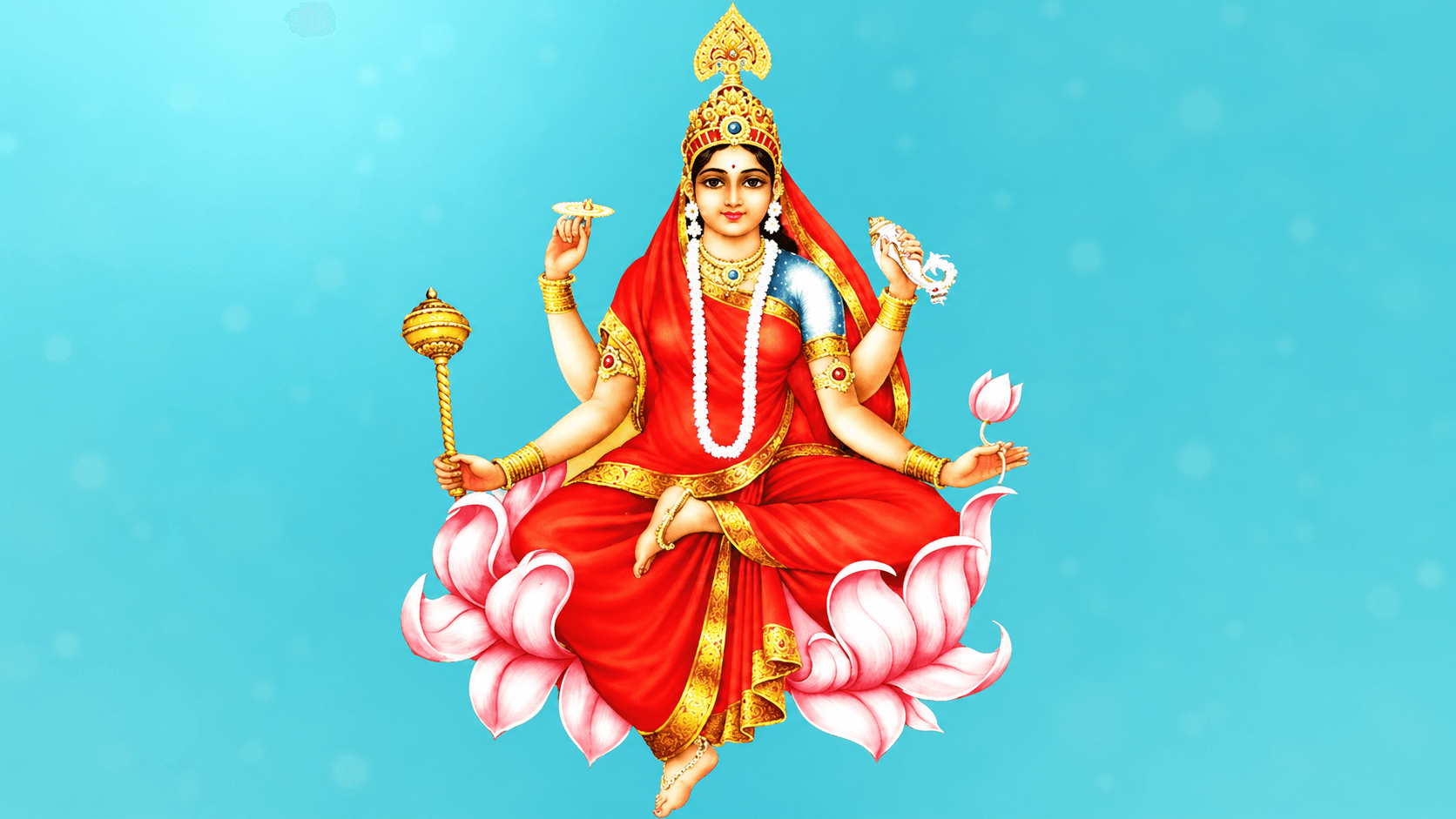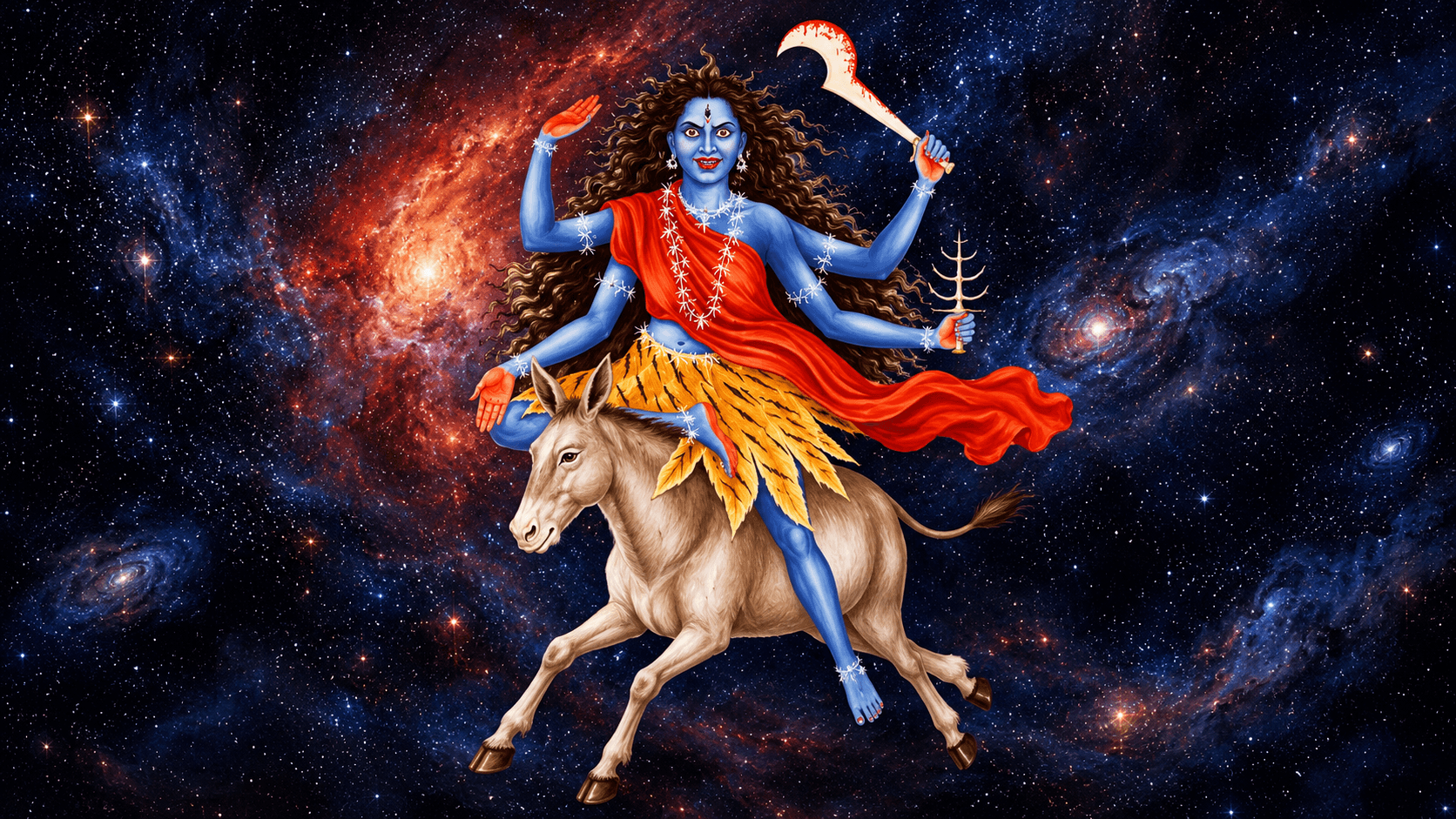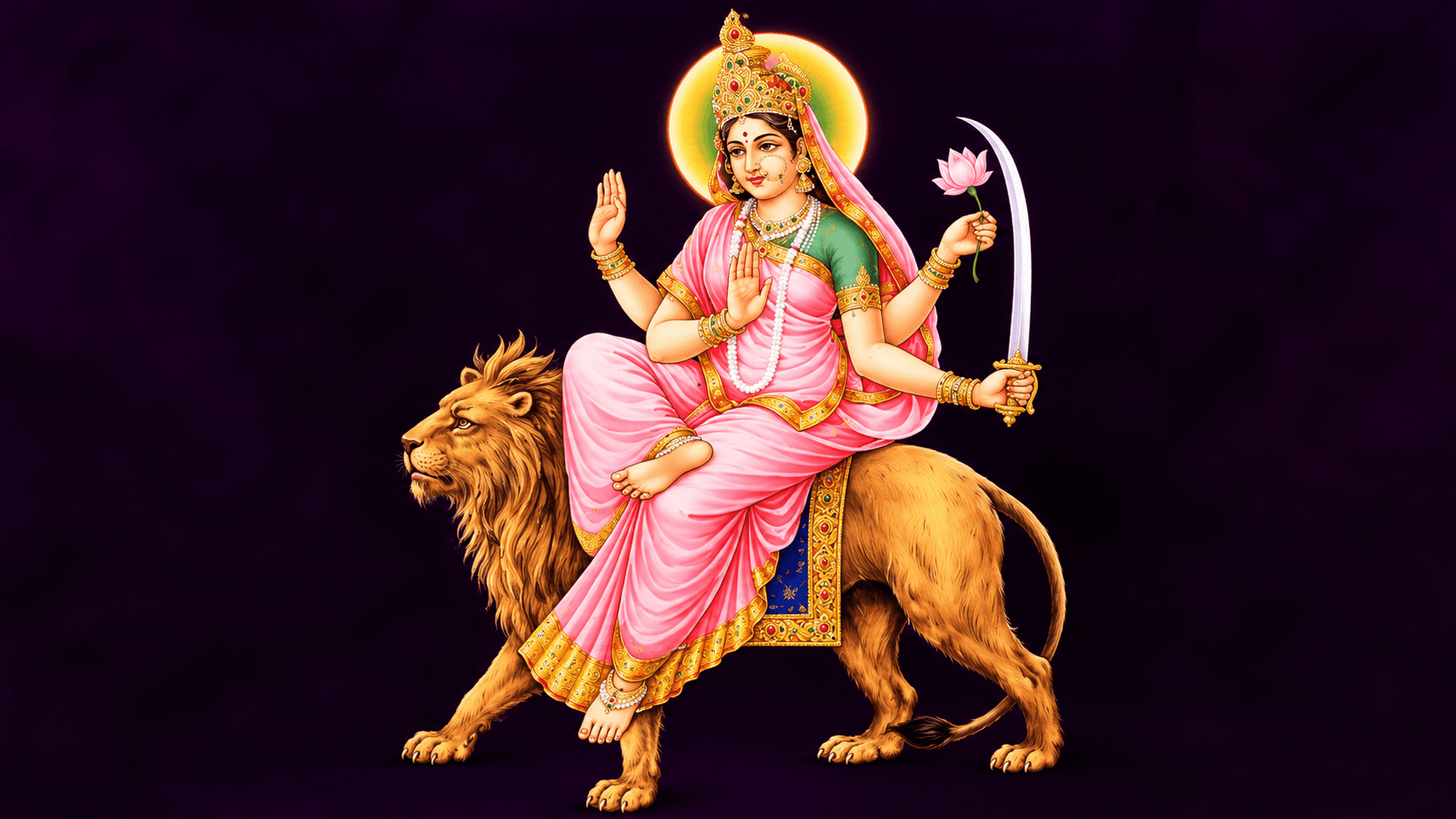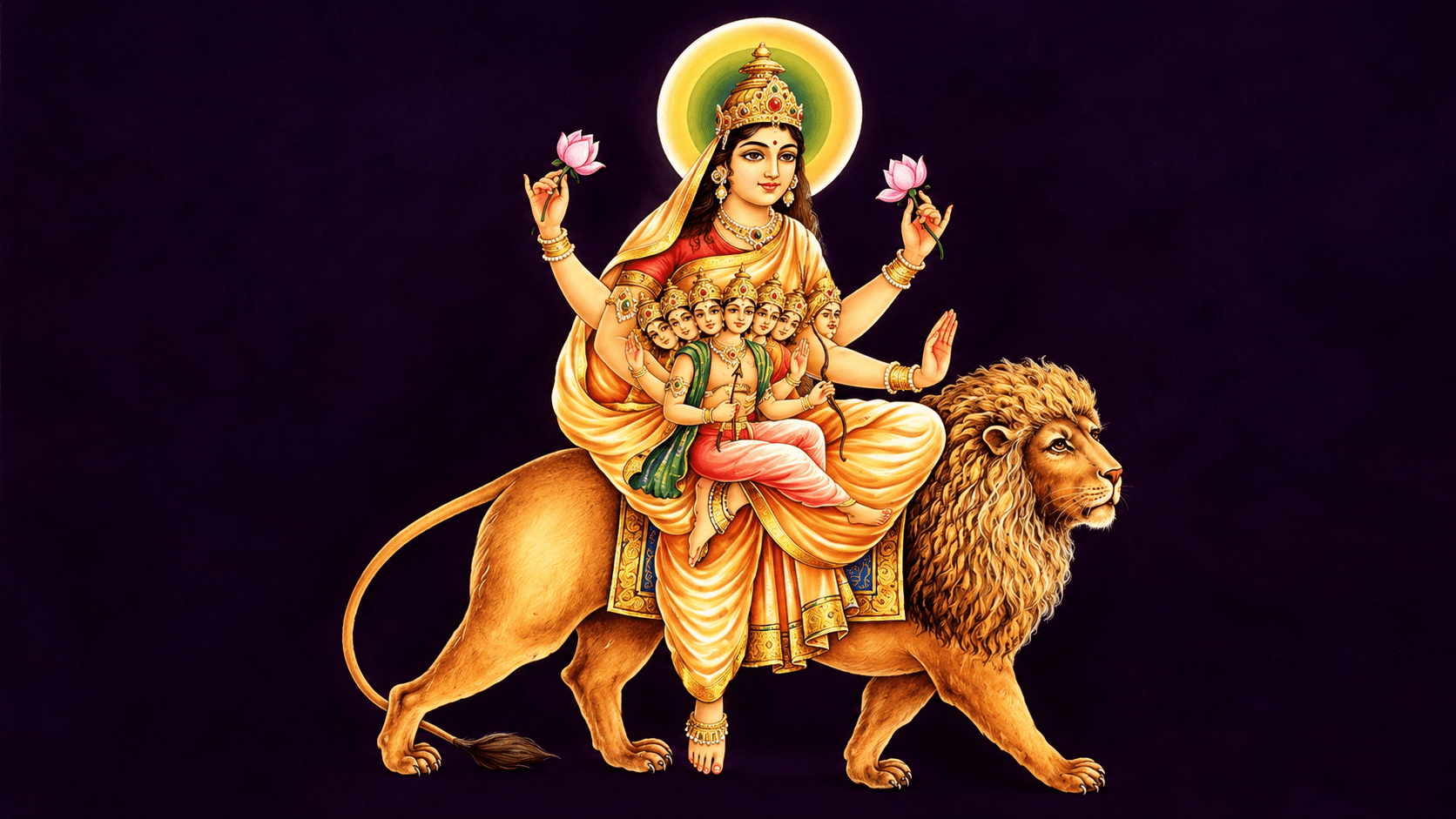
Sunday, 18th October 2026, is Durga Ashtami, the eighth day of Sharad Navratri, and it is dedicated to Maa Mahagauri. After the fierce form of Kalaratri on Day 7, Day 8 brings the Goddess in her most peaceful and radiant form. Devotees worship Maa Mahagauri as a symbol of purity, compassion and inner peace, seeking her blessings for happiness and prosperity. Ashtami is also the day many families perform Kanya Puja, honouring young girls as forms of the Goddess.
Who is Maa Mahagauri?
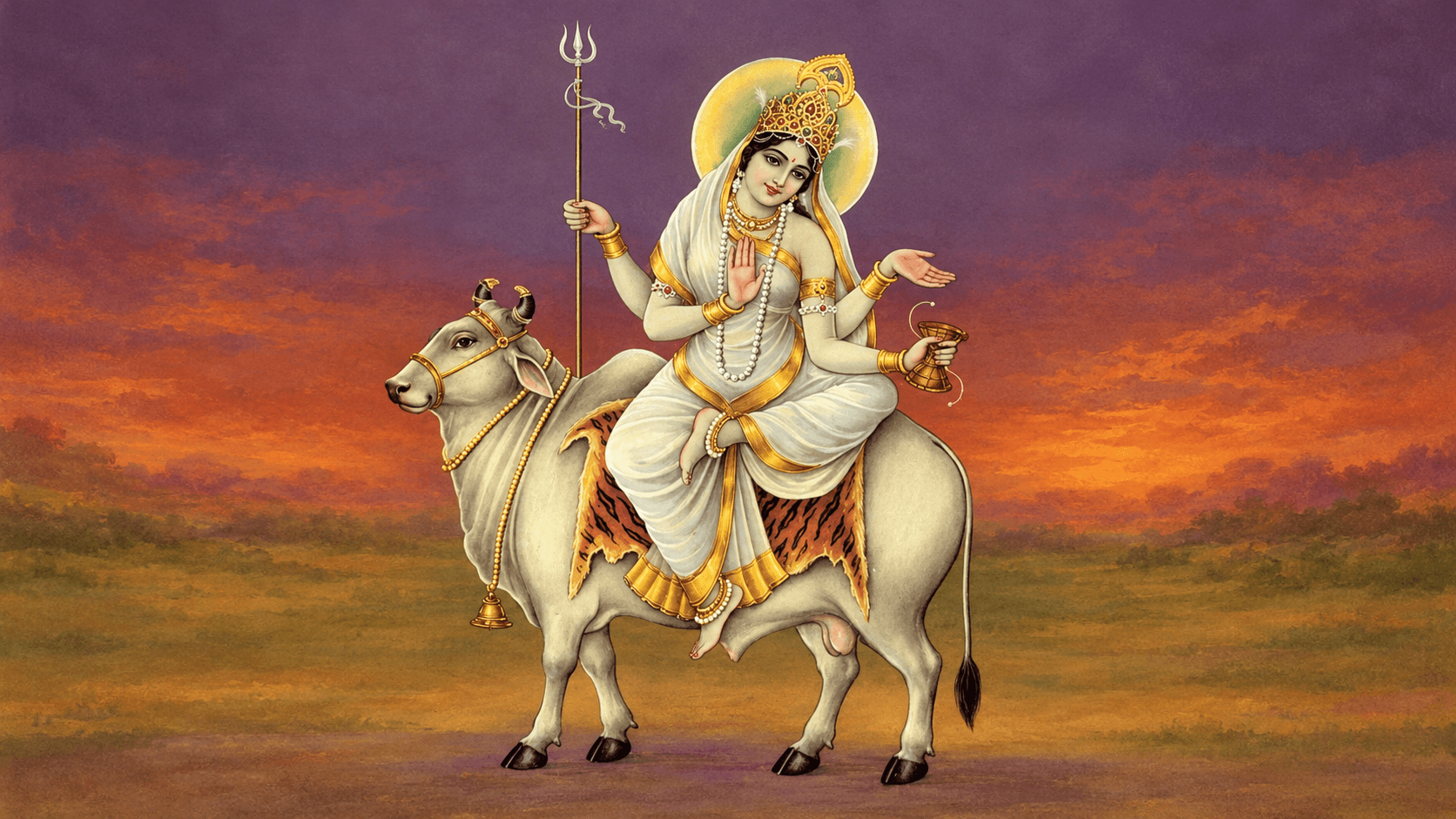
Maha means great and gauri means fair or bright. Maa Mahagauri is the Goddess of great radiance, dressed in white and seated on a white bull. Her form stands for purity, calm and forgiveness.
The Story of Maa Mahagauri
During her long penance to be united with Lord Shiva, Parvati lived in the forest, enduring heat, rain and cold with patience and determination. Over the years, her body became dark and covered with dust, but her faith and devotion remained strong. When Lord Shiva was finally pleased with her prayers and accepted her, he bathed her with the sacred waters of the Ganga.
Her body became bright and fair again, shining with a divine glow, and she became known as Mahagauri. Her transformation symbolises purity, inner strength and the power of unwavering devotion. Devotees believe her story teaches that sincere faith and patience can help overcome even the greatest difficulties.
The story also connects Day 8 with Day 2 of Navratri. The long penance and determination of Maa Brahmacharini finally finds fulfillment in the peaceful and radiant form of Maa Mahagauri.
Symbolism and Iconography
Maa Mahagauri can be depicted in the following way:
-
Complexion: Very fair, often compared to a conch, the moon or jasmine flowers.
-
Clothing: White garments and ornaments, which is why she is also called Shvetambaradhara.
-
Vehicle: A white bull.
-
Arms: Four arms. She holds a trident and a damaru (small drum), and her other two hands give blessings and protection.
Maa Mahagauri Puja Vidhi at Home
Here is a simple procedure to worship Maa Mahagauri at home:
-
Bathe early and wear clean clothes.
-
Clean the altar, sprinkle Gangajal and worship the kalash.
-
Place a picture of Maa Mahagauri and offer white flowers such as jasmine, along with sandalwood, kumkum and akshat.
-
Light a ghee lamp and incense.
-
Chant her dhyana mantra and stuti.
-
Offer the bhoga and perform aarti.
-
If your family follows the custom, perform Kanya Puja after the main puja.
Kanya Puja on Durga Ashtami
In Kanya Puja, young girls, traditionally nine of them and usually between two and ten years old, are invited home and honoured as forms of the Goddess. A young boy is often invited as well. The family washes their feet, applies kumkum, offers them a meal of puri, chana and halwa, and gives them small gifts before seeking their blessings.
This beautiful tradition reflects the belief that the divine presence of Maa Durga can be seen in every young girl. It also teaches devotees the importance of respecting, caring for and honouring children with love and kindness. Some families perform Kanya Puja on Navami (Day 9) instead of Ashtami, according to family custom.
Maa Mahagauri Mantra
Dhyana mantra
श्वेते वृषे समारूढा श्वेताम्बरधरा शुचिः।
महागौरी शुभं दद्यान्महादेवप्रमोददा॥
Shvete vrishe samarudha shvetambaradhara shuchih, mahagauri shubham dadyan mahadeva-pramodada.
Meaning: May Maa Mahagauri, who rides a white bull and wears pure white garments, bless her devotees with peace, purity, happiness and auspiciousness, bringing joy to Lord Shiva and all who seek her divine grace.
Stuti
या देवी सर्वभूतेषु माँ महागौरी रूपेण संस्थिता।
नमस्तस्यै नमस्तस्यै नमस्तस्यै नमो नमः॥
Simple mantra: ॐ देवी महागौर्यै नमः (Om Devi Mahagauryai Namah)
Bhoga and Colour for Day 8
The bhoga and colour for Day 8 are:
Bhoga: Coconut is the traditional offering to Maa Mahagauri. Halwa, puri and chana are also prepared on Ashtami, especially for Kanya Puja. Keep all bhoga sattvic.
Colour: In the weekday-based tradition followed in Maharashtra, Day 8 in 2026 falls on a Sunday, and the colour is purple. Other regions use different lists.
A Devotional Reflection: Cleansing the Heart
Maa Mahagauri's radiance came after her body was washed clean. Sri Chaitanya Mahaprabhu's Shikshashtakam begins with a similar image. It describes the chanting of the Lord's holy names as cheto-darpana-marjanam: cleaning the mirror of the heart.
Over years, the heart collects dust in the form of envy, anger, pride and selfish desire. Just as the Ganga's water restored Parvati's natural brightness, regular chanting is understood to restore the soul's natural purity. Day 8 is a good day to chant a few extra rounds with full attention, and to forgive someone you have been holding something against.
Maa Mahagauri's story shows that purity comes from patient effort. Parvati's long penance, and the Ganga's waters that restored her radiance, remind us that the heart can also be cleansed. During this Durga Ashtami, you can offer coconut bhoga, chant her mantra and honour the young girls in Kanya Puja. Then take one quiet step inward: chant a few extra rounds of the Hare Krishna maha-mantra with full attention, and let go of an old grudge.
May Maa Mahagauri bless you and your family with peace, purity and devotion this Navratri. To continue your spiritual journey, join the community at ISKCON Bhiwandi, where you can take part in kirtans, festivals and seva throughout the year.
FAQs
When is Durga Ashtami in 2026?
Durga Ashtami, Navratri Day 8, falls on Sunday, 18th October 2026.
Why is Maa Mahagauri dressed in white?
White stands for purity and peace. After Lord Shiva bathed her in the Ganga, her form became bright white, and she is shown in white garments.
Is Kanya Puja done on Ashtami or Navami?
Ashtami and Navami are both traditional. The choice depends on your family customs. Many families perform it on Ashtami, while others do it on Navami.
What bhoga is offered to Maa Mahagauri?
Coconut is the traditional bhoga on Day 8, along with halwa, puri and chana.