Monday, 19th October 2026, is Maha Navami, the ninth and final day of Sharad Navratri, dedicated to Maa Siddhidatri. She is the last of the Navadurga, the Goddess who grants siddhis (perfections). The next day, Tuesday 20 October, is Vijayadashami (Dussehra), which celebrates Lord Rama's victory over Ravana.
Who is Maa Siddhidatri?
Siddhi means perfection or accomplishment, and datri means giver. Maa Siddhidatri is the giver of perfections. She is worshipped by gods, sages, siddhas, gandharvas and human beings alike.
The Story of Maa Siddhidatri
According to tradition, at the beginning of creation, Lord Shiva worshipped the Goddess as the original divine power, and by her grace, he received all the siddhis. Half of his body became the Goddess, and this united form is known as Ardhanarishvara.
The scriptures list eight main siddhis: anima (becoming very small), mahima (becoming very large), garima (becoming very heavy), laghima (becoming very light), prapti (reaching anything), prakamya (fulfilling any desire), ishitva (power to control) and vashitva (power to subdue). Maa Siddhidatri is described as the source of all these divine powers.
Devotees believe that worshipping Maa Siddhidatri with sincere faith brings spiritual wisdom, inner strength and progress on the path to liberation. Her blessings are also believed to help devotees overcome worldly attachments and move closer to divine consciousness.
Symbolism and Iconography
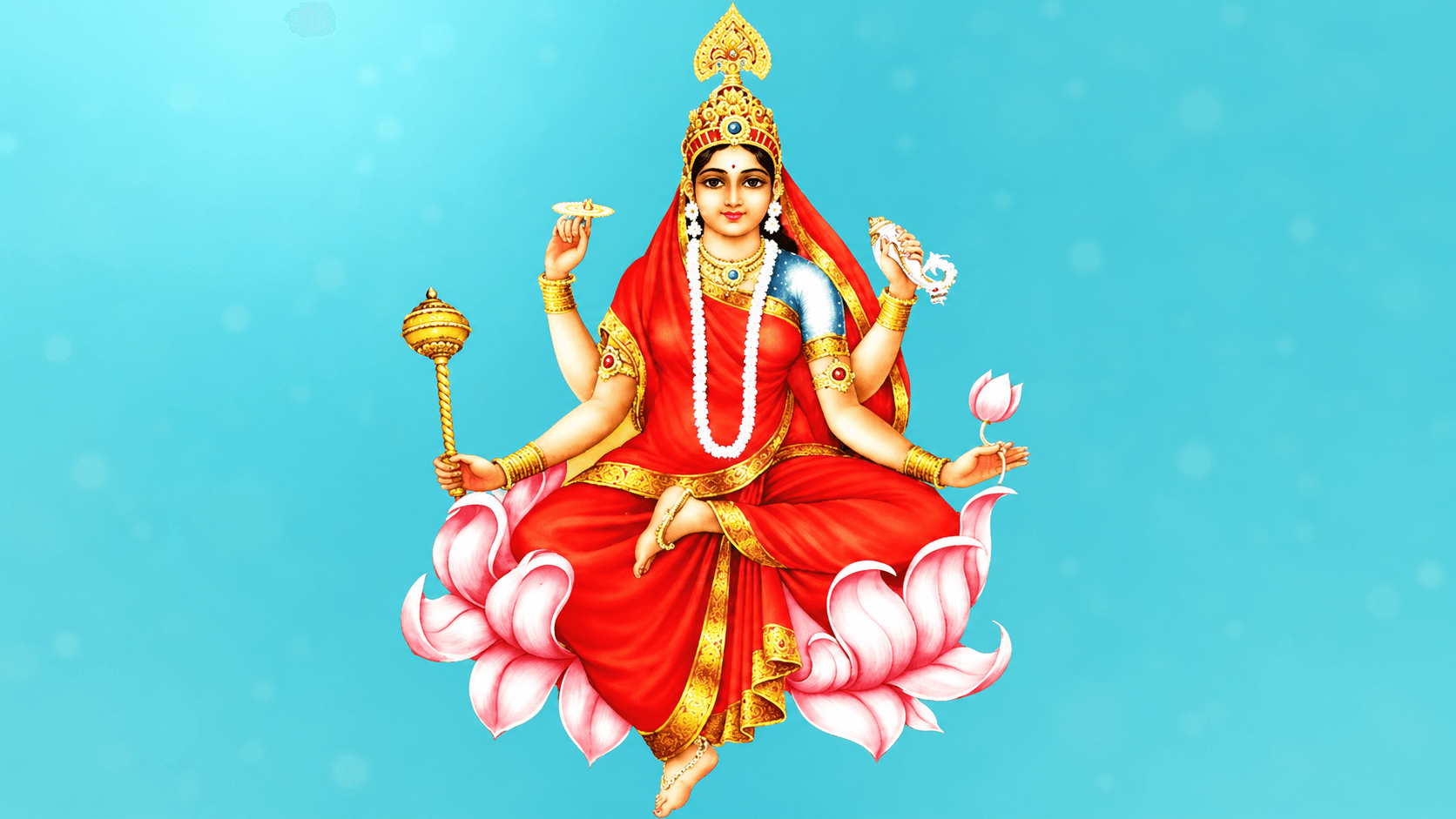
Maa Siddhidatri is depicted in the following manner:
-
Seat: A lotus. She is also shown riding a lion.
-
Arms: Four arms, holding a discus (chakra), a mace (gada), a conch (shankha) and a lotus.
-
Expression: Calm and full of grace.
The discus, mace, conch and lotus are also the four symbols carried by Lord Vishnu. Hence, her form joins the nine days of worship back to the Supreme Lord, the source of all energy.
Maa Siddhidatri Puja Vidhi at Home
Here is a simple way to worship Maa Siddhidatri:
-
Bathe early and wear clean clothes.
-
Clean the altar, sprinkle Gangajal and worship the kalash.
-
Place a picture of Maa Siddhidatri and offer flowers, sandalwood, kumkum and akshat.
-
Light a ghee lamp and incense.
-
Chant her dhyana mantra and stuti.
-
Offer the bhoga and perform aarti.
-
Many families perform a havan and Kanya Puja on Navami to complete the nine days. The fast is then broken with prasad.
Maa Siddhidatri Mantra
Dhyana mantra
सिद्धगन्धर्वयक्षाद्यैरसुरैरमरैरपि।
सेव्यमाना सदा भूयात् सिद्धिदा सिद्धिदायिनी॥
Siddha-gandharva-yakshadyair asurair amarair api, sevyamana sada bhuyat siddhida siddhidayini.
Meaning: May Siddhidatri, the giver of perfection, who is always served by siddhas, gandharvas, yakshas, demons and gods, bless us with success.
Stuti
या देवी सर्वभूतेषु माँ सिद्धिदात्री रूपेण संस्थिता।
नमस्तस्यै नमस्तस्यै नमस्तस्यै नमो नमः॥
Simple mantra: ॐ देवी सिद्धिदात्र्यै नमः (Om Devi Siddhidatryai Namah)
Bhoga and Colour for Day 9
The bhoga and colour for day 9 are:
Bhoga: Sesame seeds (til) are traditionally offered to Maa Siddhidatri. Halwa, puri and chana are also prepared on Navami, especially where Kanya Puja is done. Keep all the bhoga sattvic.
Colour: In the weekday-based tradition followed in Maharashtra, Day 9 in 2026 falls on a Monday and the colour is peacock green. Other regions use different lists.
A Devotional Reflection: The Highest Perfection
The eight siddhis are extraordinary powers, yet the Bhagavad Gita points to something even greater. At the end of the chapter on yoga (6.47), Lord Krishna says:
योगिनामपि सर्वेषां मद्गतेनान्तरात्मना।
श्रद्धावान्भजते यो मां स मे युक्ततमो मतः॥
Yoginam api sarvesham mad-gatenantaratmana, shraddhavan bhajate yo mam sa me yuktatamo matah.
"Of all yogis, the one who always abides in Me with great faith, worshipping Me in loving service, is the most closely united with Me and is the highest of all."
In the Vaishnava view, the highest gift on the last day of Navratri is pure devotion rather than mystic power. The nine days began with Maa Shailputri's steady faith and ends here, with the prayer that all our efforts lead to loving service of the Lord. Day 9 is a good day to look back on the practices you took up during Navratri and choose one to continue.
Maa Siddhidatri completes the nine days of Navratri as the giver of perfection. Yet Lord Krishna teaches in the Bhagavad Gita that the highest perfection is not mystic power but pure devotion and loving service. As Navratri ends, you can offer sesame bhoga, chant her mantra and complete your Navami puja. Then take one practice from these nine days, such as daily chanting, reading the Gita or serving prasadam, and carry it forward into the year ahead. The true spirit of Navratri lies in keeping this devotion alive even after the celebrations come to an end. Through regular prayers, selfless service and remembrance of the Divine, you can continue to strengthen your spiritual connection every day.
May Maa Siddhidatri bless you and your family with success, peace and devotion. To keep this spiritual momentum going, join the community at ISKCON Bhiwandi, where you can take part in kirtans, festivals and seva throughout the year.
FAQs
When is Maha Navami in 2026?
Maha Navami, Navratri Day 9, falls on Monday, 19 October 2026. Vijayadashami (Dussehra) is on Tuesday, 20 October 2026.
What are the eight siddhis?
Anima, mahima, garima, laghima, prapti, prakamya, ishitva and vashitva. Maa Siddhidatri is described as their source.
What does Maa Siddhidatri hold in her hands?
A discus, a mace, a conch and a lotus, the same four symbols carried by Lord Vishnu.
What bhoga is offered to Maa Siddhidatri?
Sesame seeds are the traditional bhoga, along with halwa, puri and chana on Navami.